PostgreSQL is already portable. A dump, a replica, a logical migration, or a normal connection string can move a lot of teams further than they expect.
The managed database experience around PostgreSQL is usually the part that is not portable.
That is the problem we care about at LayerRail. Developers want the calm parts of managed PostgreSQL: provisioning, health checks, backups, point-in-time restore, encrypted connections, private networking, and a clear bill. They also want the escape hatch that made PostgreSQL trustworthy in the first place: standard Postgres, understandable infrastructure, and a control plane they can inspect instead of a provider-specific maze.
This post explains the model we are building for LayerRail PostgreSQL and why it belongs inside the same project-centered cloud console as virtual machines, private networking, Kubernetes, GitHub runners, AI inference, and budgets.
The thing teams actually buy
When a team pays for managed PostgreSQL, it is not really buying PostgreSQL. PostgreSQL is already excellent and open.
The team is buying fewer operational mistakes:
- A database can be created without hand-building a server.
- The right ports are private by default.
- TLS, credentials, and connection strings are issued consistently.
- Backups happen even when nobody remembers to set a calendar reminder.
- A restore can be performed when a migration goes sideways.
- The monthly cost is visible before the invoice becomes a surprise.
The problem is that many managed database products bundle those operational wins with a closed control plane. The APIs, state model, billing rules, recovery behavior, and migration paths are specific to that provider.
LayerRail takes the opposite stance: keep the managed experience, but make the shape of the system legible.
How the LayerRail model works
LayerRail treats managed PostgreSQL as a project resource, not as an isolated product tab. That sounds small, but it changes the daily workflow.
Your database lives next to the virtual machines, private subnets, firewalls, load balancers, access tokens, and spend records it depends on. The control plane can answer practical questions without sending you through five dashboards:
- Which project owns this database?
- Which private network can reach it?
- Which workload is allowed to talk to port 5432?
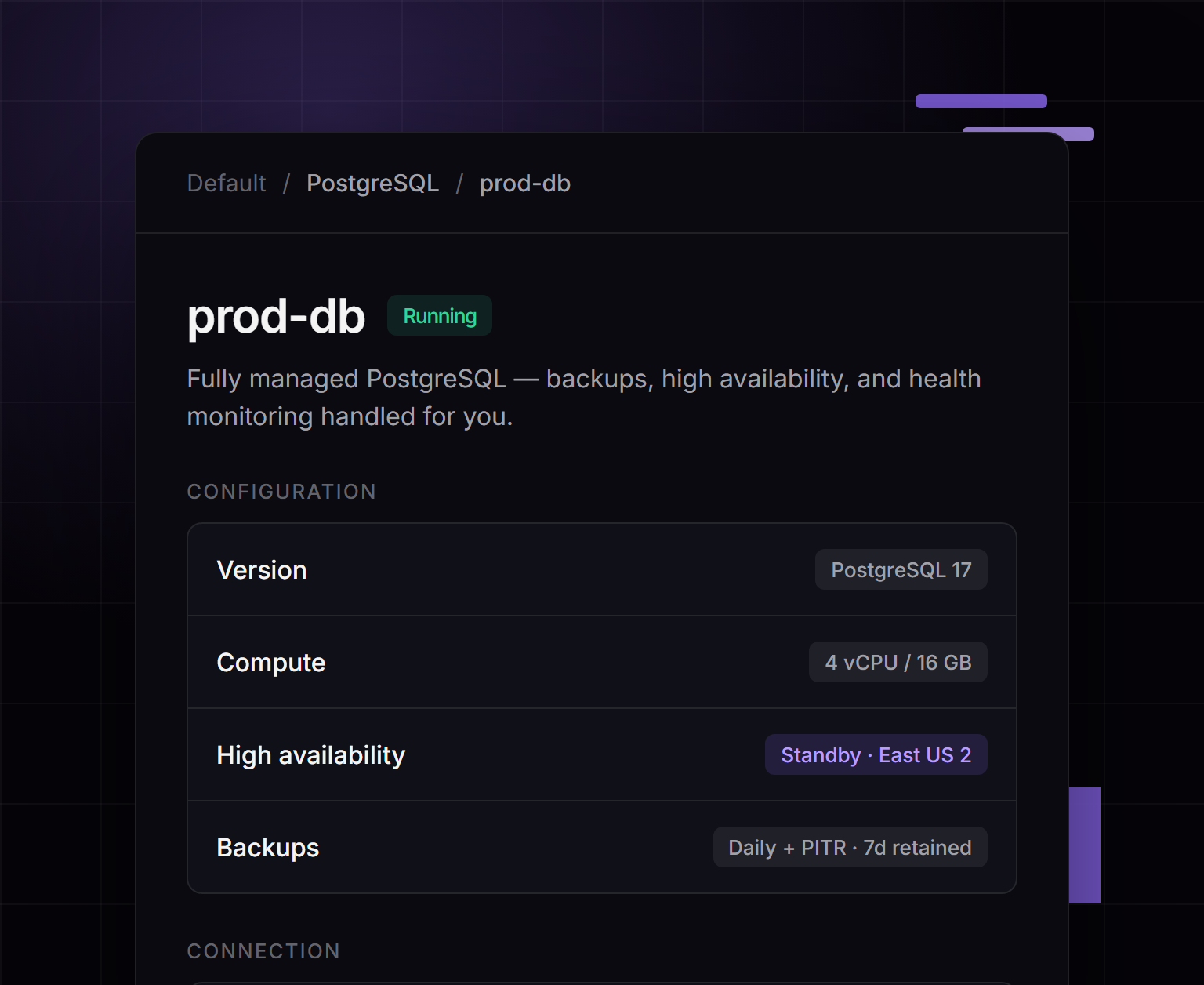
- What backup window and restore policy are attached?
- What has this database cost this month?
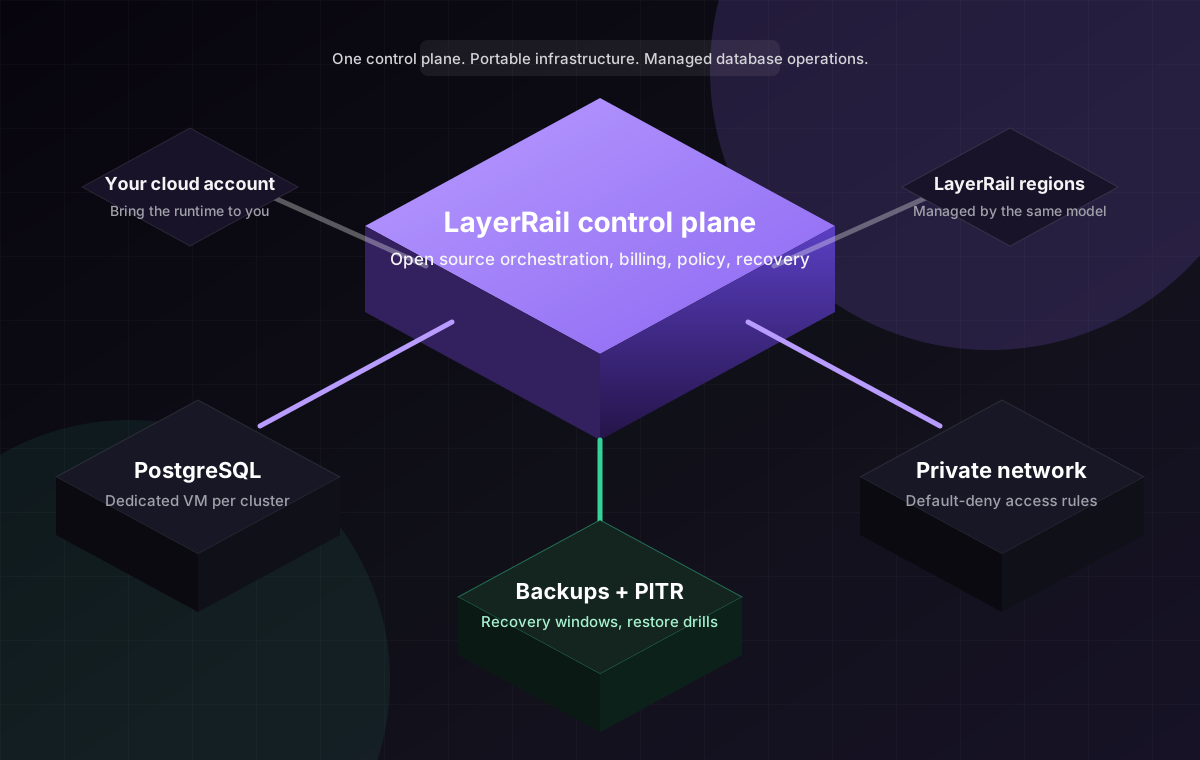
The runtime can still be simple: a PostgreSQL cluster backed by dedicated VM infrastructure, with private networking, encrypted connections, automated backups, and optional high availability. The difference is that the control plane does not pretend those pieces are unrelated.
Portability is an operating model
Portability is often described like a dramatic exit plan: one day you pick up your entire stack and leave.
In practice, portability is more useful as a daily operating model. It means the team can reason about what is running, where the state lives, what is provider-specific, and what would need to change if the workload moved.
For PostgreSQL, the portable parts should stay boring:
- Standard PostgreSQL versions and extensions where possible.
- Normal connection strings and credentials.
- Backups and restores that do not require magic.
- Infrastructure that maps cleanly to compute, storage, networking, and policy.
- A control plane whose source can be read, audited, and self-hosted.
That last part matters. If the control plane is closed, the database may be open but the managed service still becomes a black box. If the control plane is open, teams can understand the automation around the database, contribute to it, or run it closer to their own infrastructure needs.
A managed database should be close to the network
The database is rarely the only thing that matters. It is usually part of a private application graph: API servers, workers, dashboards, queue consumers, CI jobs, and observability tools.
That is why LayerRail PostgreSQL belongs in the same console as private networking.
The default should be conservative. Put the database on a private subnet. Deny public access unless there is a deliberate reason to open it. Make the allowed paths visible. Keep the connection details close to the services that use them.
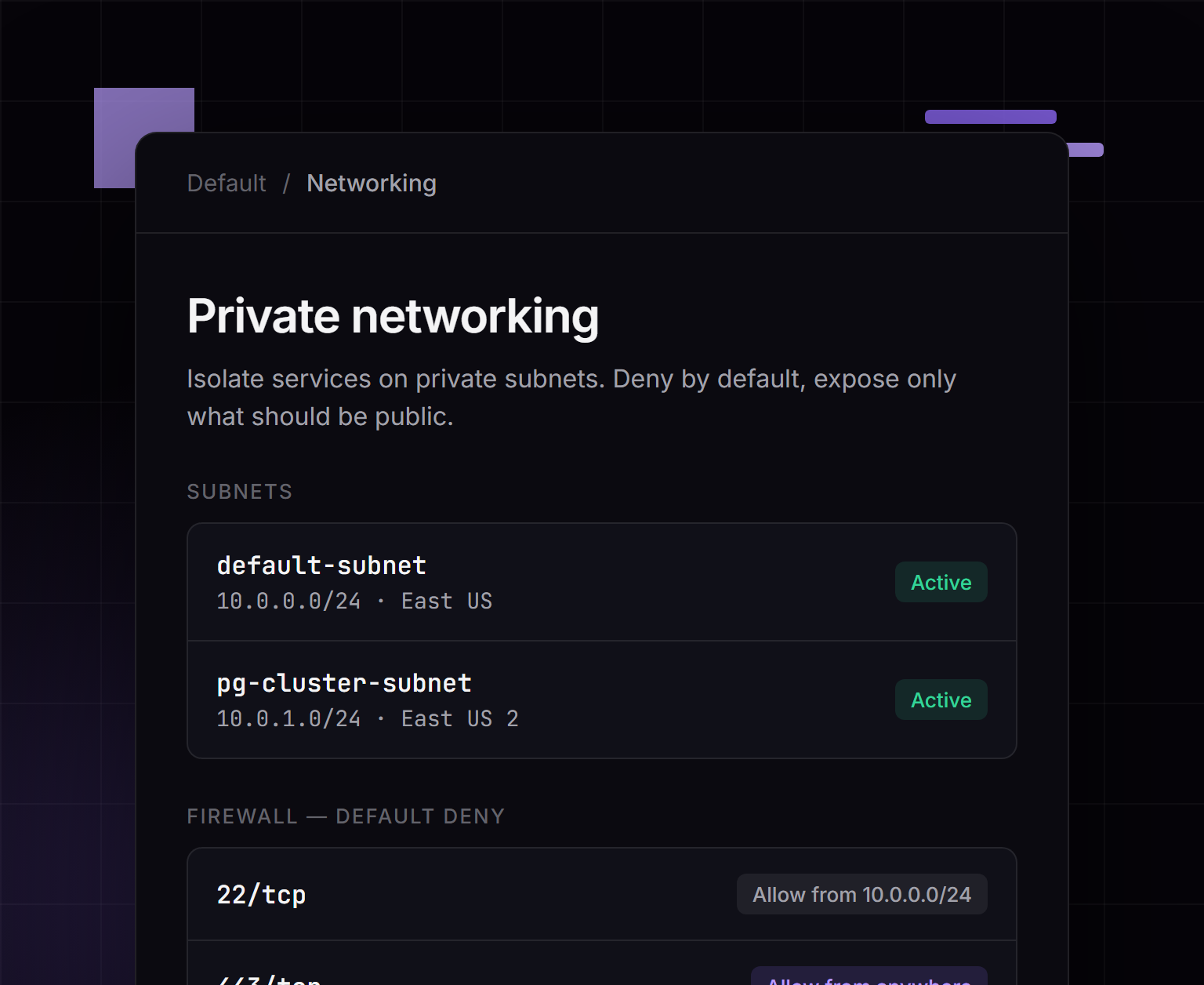
This also makes cost and security reviews less theatrical. Instead of asking the team to reconstruct intent from scattered cloud objects, the project view can show the database, the network, the policy, and the bill together.
The runtime layers
A good managed PostgreSQL service has to be clear about what it automates. At LayerRail, the useful mental model is a stack of runtime layers:
- Application traffic reaches the database through private endpoints and TLS.
- The cluster runs on VM-backed infrastructure with a primary database node and optional standby.
- Backups and point-in-time restore are attached to the database lifecycle.
- Monitoring watches health, resource pressure, and availability.
- Billing records usage against the project while the resource is alive.
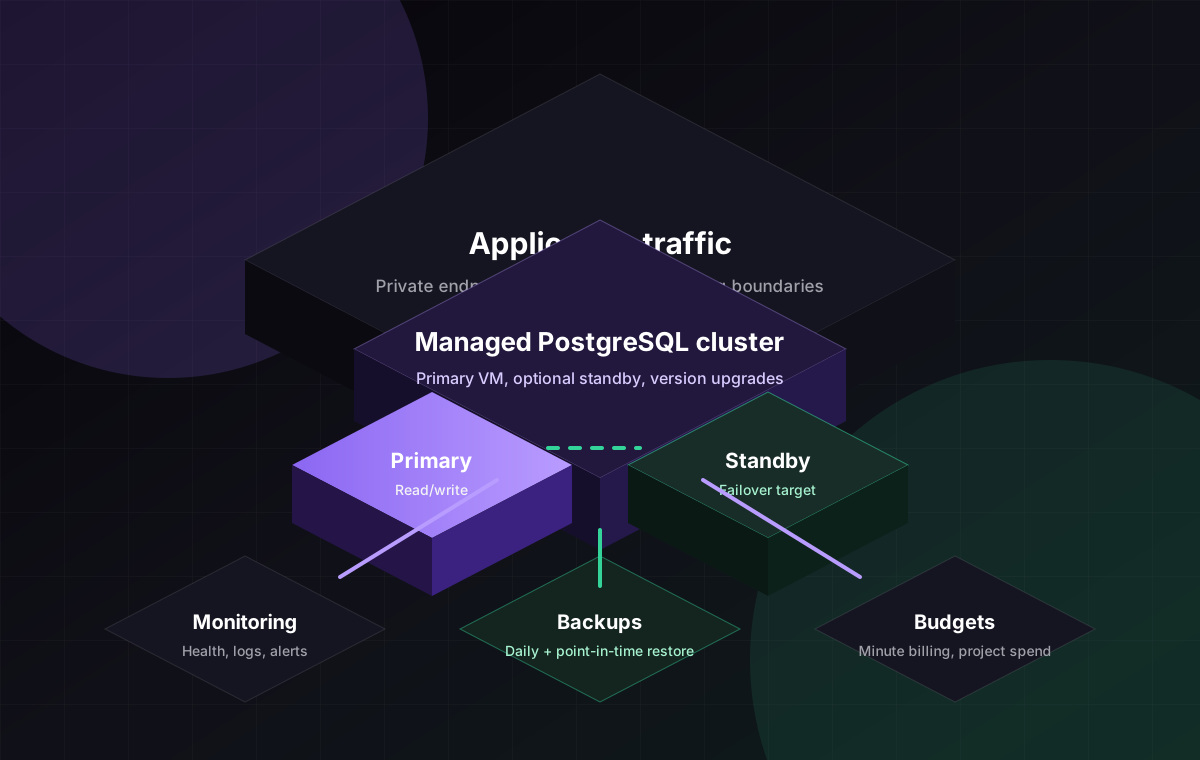
This is the part that should not feel mysterious. There can be sophisticated automation underneath, but the resource model should still be explainable to a developer on call at 2 a.m.
What LayerRail manages for you
Managed PostgreSQL should remove chores, not remove understanding.
LayerRail is designed around the operational work teams expect from a database platform:
- Provisioning: create a database from the same project workspace that owns the rest of the infrastructure.
- Versioning: choose a supported PostgreSQL version and keep upgrades explicit.
- Networking: attach the database to private subnets and firewall policy.
- Security: use encrypted connections and scoped access rather than loose shared credentials.
- Backups: run scheduled backups and support point-in-time recovery windows.
- High availability: place standby capacity where the workload requires it.
- Observability: surface health and recent activity in the project console.
- Cost control: bill duration-based resources by the minute and show spend beside the resource.
The goal is not to invent a more exotic database. The goal is to make the normal PostgreSQL operating loop quieter and more visible.
What stays yours
The cleanest managed services are honest about the boundary.
LayerRail can provision and operate the database infrastructure, but your team still owns the schema, query patterns, migrations, retention choices, and application behavior. Managed PostgreSQL will not fix an unbounded query, a missing index, or a migration that rewrites half the table during peak traffic.
That boundary is healthy. The platform should handle repeatable infrastructure work. The application team should keep control of the product-specific data model. The console should make the handoff obvious enough that neither side has to guess.
Why project-centered billing matters
Database cost can hide in plain sight. A production database starts small, then storage grows, replicas appear, analytics jobs arrive, and suddenly the bill is treated like weather.
LayerRail puts spend inside the same project context as the resource. You can see the database beside the services that use it, then compare usage against a project budget.
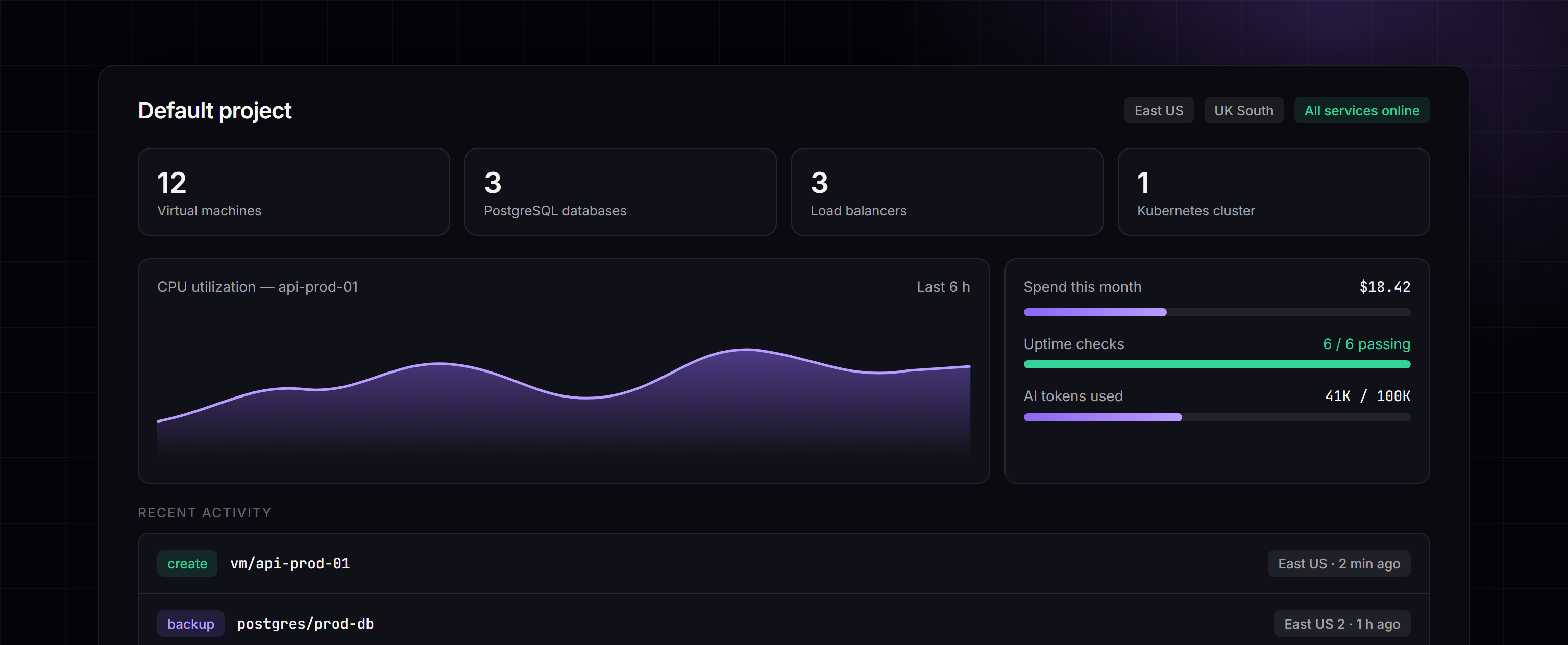
This matters most for teams running multiple environments. Development and analytics databases are often perfect candidates for a lower-friction, lower-cost managed model, but only if the spend stays visible and the lifecycle stays easy to control.
When this approach fits
Portable managed PostgreSQL is a strong fit when:
- You want managed database operations without turning the control plane into a black box.
- You run application infrastructure that benefits from project-scoped networking and budgets.
- You want to keep a credible self-hosting or provider-migration path.
- You need development, staging, analytics, or production databases with clear ownership.
- Your team prefers standard PostgreSQL primitives over provider-only abstractions.
It is not a shortcut around database discipline. Large production databases still deserve capacity planning, restore testing, migration rehearsal, query review, and clear ownership. The point is to make those practices easier to carry, not to pretend they are optional.
The bigger idea
The cloud should be simpler to leave than it is today.
That does not mean every team will leave. Most teams do not want dramatic infrastructure rewrites. They want leverage, predictable costs, and the confidence that their platform choices are not quietly narrowing their future.
PostgreSQL is a good place to draw that line because the database itself already proved the value of openness. LayerRail’s job is to make the managed layer around it feel just as inspectable: databases, networks, backups, observability, and budgets in one project-centered control plane.
That is the version of managed PostgreSQL we want: calm enough to use every day, open enough to trust, and portable enough that the exit door stays real.
Build your next layer.
Run compute, networking, and managed services from one project-centered console.